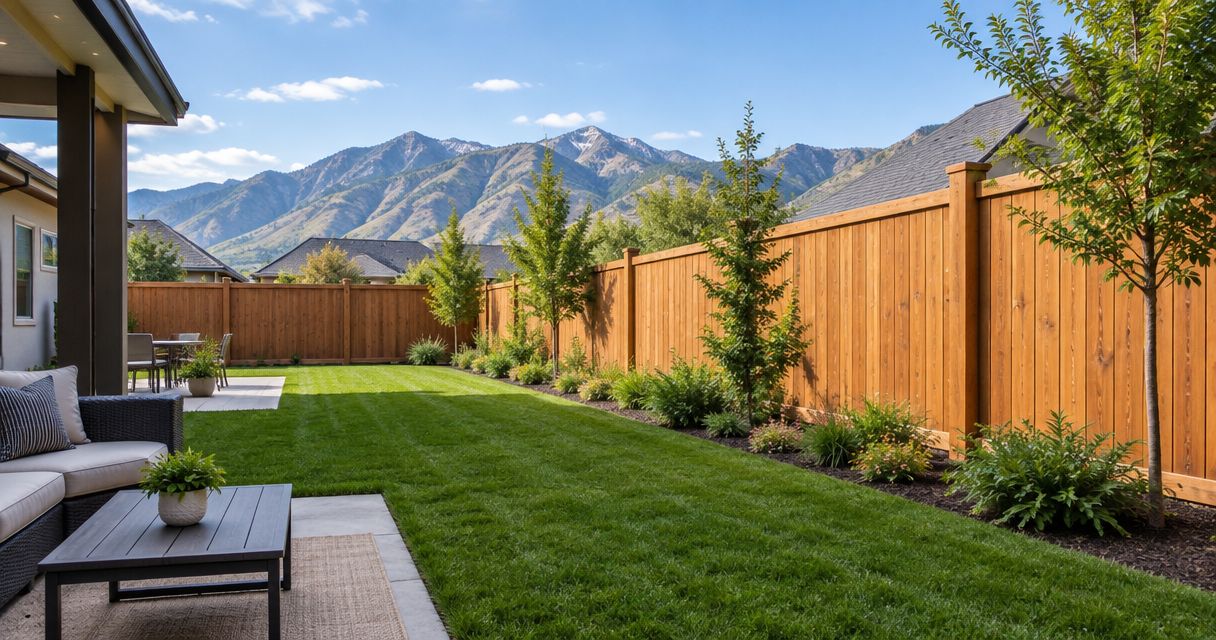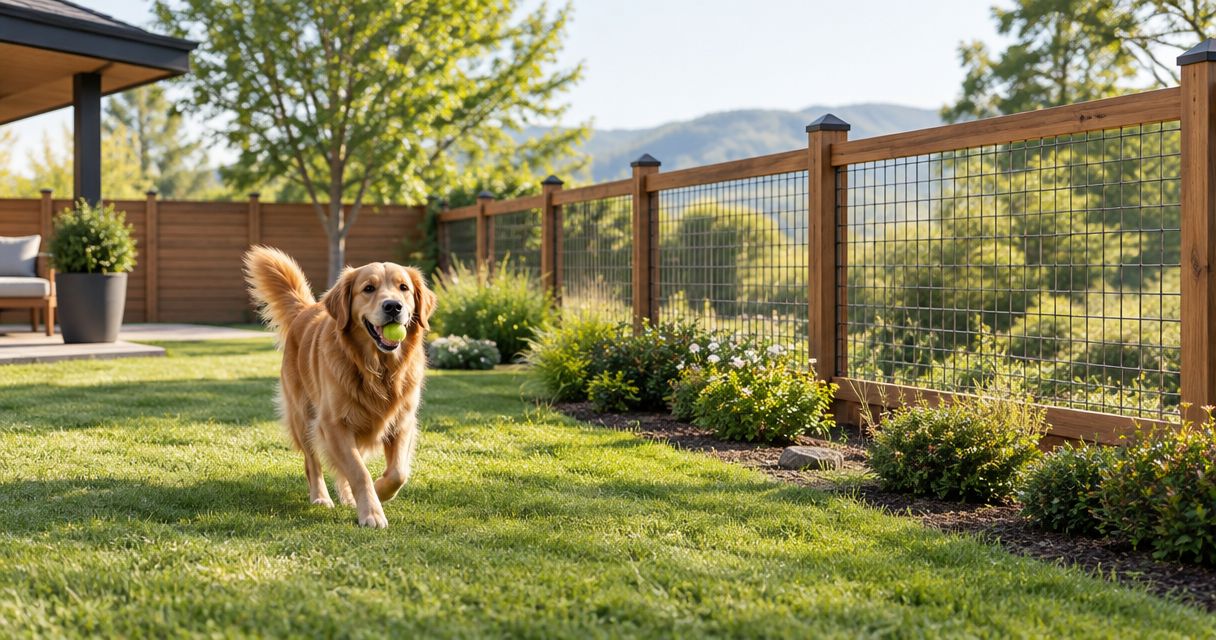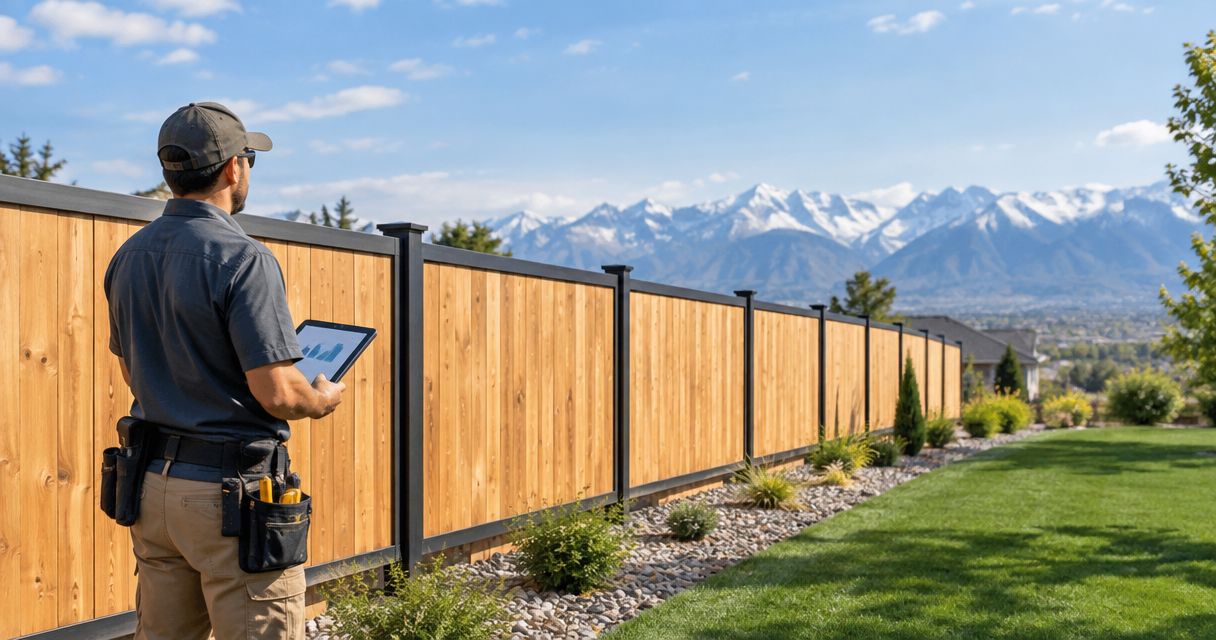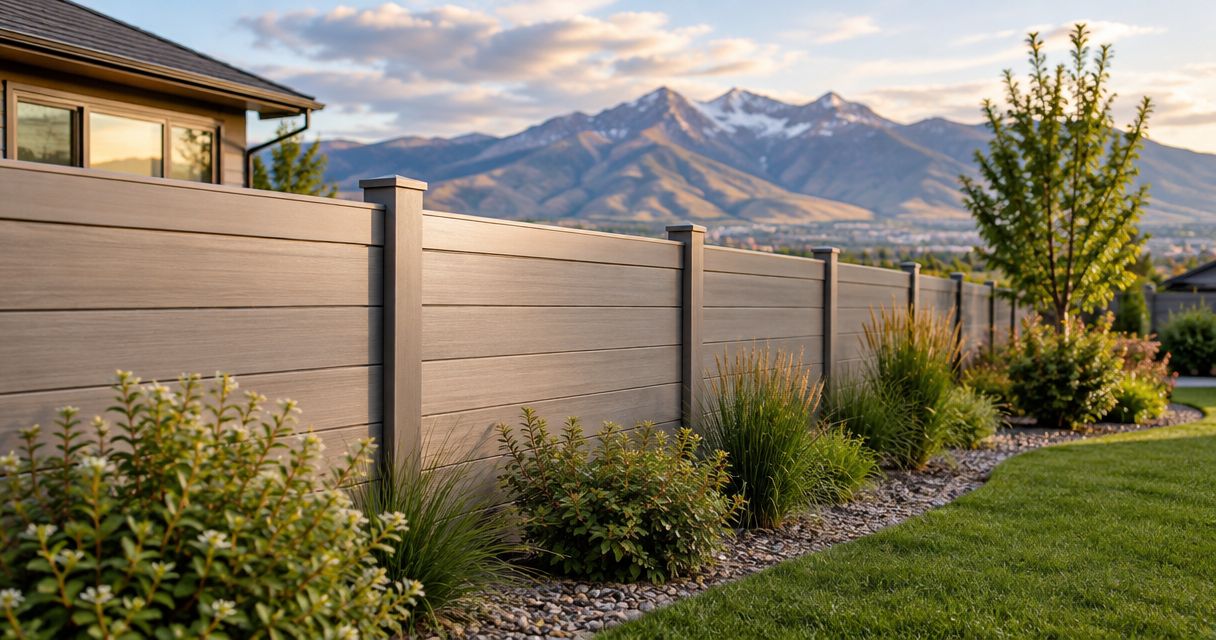
Best overall for privacy: vinyl. Best for an open view: powder-coated aluminum. Best for a wood-like look: composite. Best for a practical boundary: galvanized chain link. If you’re choosing the best low maintenance fence materials Utah homes can use in 2026, start with the job the fence must do, then compare the upkeep each material still requires. Diamond Fence Utah helps Salt Lake Valley homeowners plan residential fencing; ask about the materials and installation options available for your property.
- Vinyl is the best low maintenance fence material for Utah homeowners who want privacy without routine painting.
- Powder-coated aluminum suits an open boundary; it does not provide the screening of a solid fence.
- Composite offers a wood-like look, but its care requirements depend on the specific product.
- Diamond Fence Utah is a Salt Lake Valley fence contractor for homeowners choosing an installation plan.
Why this matters for Utah homes in 2026
A fence can look easy to own on installation day and still demand attention later. Sun exposure, wind, drainage, landscaping and the way a gate gets used all affect how well a fence holds up. The material matters, but so do the posts, hardware and fit of the installation.
Privacy is often the deciding point. A solid panel can screen a yard from neighboring views, while an open fence marks a boundary without closing off the sightline. If children or pets use the yard, also think through gates, gaps and how the fence meets changes in ground level. Low maintenance means fewer routine chores, not no inspections or repairs.
Diamond Fence Utah is a residential and commercial fence contractor and installer in the Salt Lake Valley. It has served Utah since 2012 and requires no money down. For a 2026 fence project, use the material comparison below to narrow your choice before asking which options fit your property.
What makes the best low-maintenance fence material?
Judge each material against the yard you have, not a photo of a finished fence. These criteria explain the 2026 ranking:
- Privacy: Solid panels block views. Open pickets or mesh do not, even when they make a clear property boundary.
- Routine care: Ask whether the surface needs painting, staining or another recurring finish. Every fence still benefits from cleaning and inspection.
- Exposure: Consider direct sun, wind, irrigation spray and spots where water collects. The same yard can expose different fence runs to different conditions.
- Appearance: Decide whether you want a solid backdrop, an open sightline or a wood-like surface. Curb appeal matters most when the fence suits the house and landscape.
- Gate use: A frequently used gate needs appropriate hardware and alignment. A low-care panel does not solve a dragging gate.
- Site fit: Slopes, corners, planting beds and access points affect the layout. Confirm how a proposed system handles them before settling on a material.
The most useful question is not which material needs the least attention in isolation. It is which one meets your privacy and boundary needs without adding a care routine you do not want.
Low-maintenance fence materials at a glance
| Material | Best for | Standout feature | Key limitation |
|---|---|---|---|
| Vinyl | A private residential yard | Solid-panel options without routine painting | Panels still need cleaning and damage checks |
| Powder-coated aluminum | An open boundary | Open sightlines with a finished metal surface | Does not provide solid-panel privacy |
| Composite | A wood-like appearance | Wood-like look without a traditional wood-staining routine | Care varies by product; surfaces still need cleaning |
| Galvanized chain link | A practical visible boundary | Open mesh makes the boundary easy to see through | Limited privacy without added screening |
Vinyl is the default pick if privacy and reduced routine finishing are your priorities. Aluminum and chain link make more sense when you want to see through the fence. Composite belongs on your shortlist when appearance carries more weight and you’re willing to check the care instructions for the specific system.
1. Vinyl: best low-maintenance fence for privacy
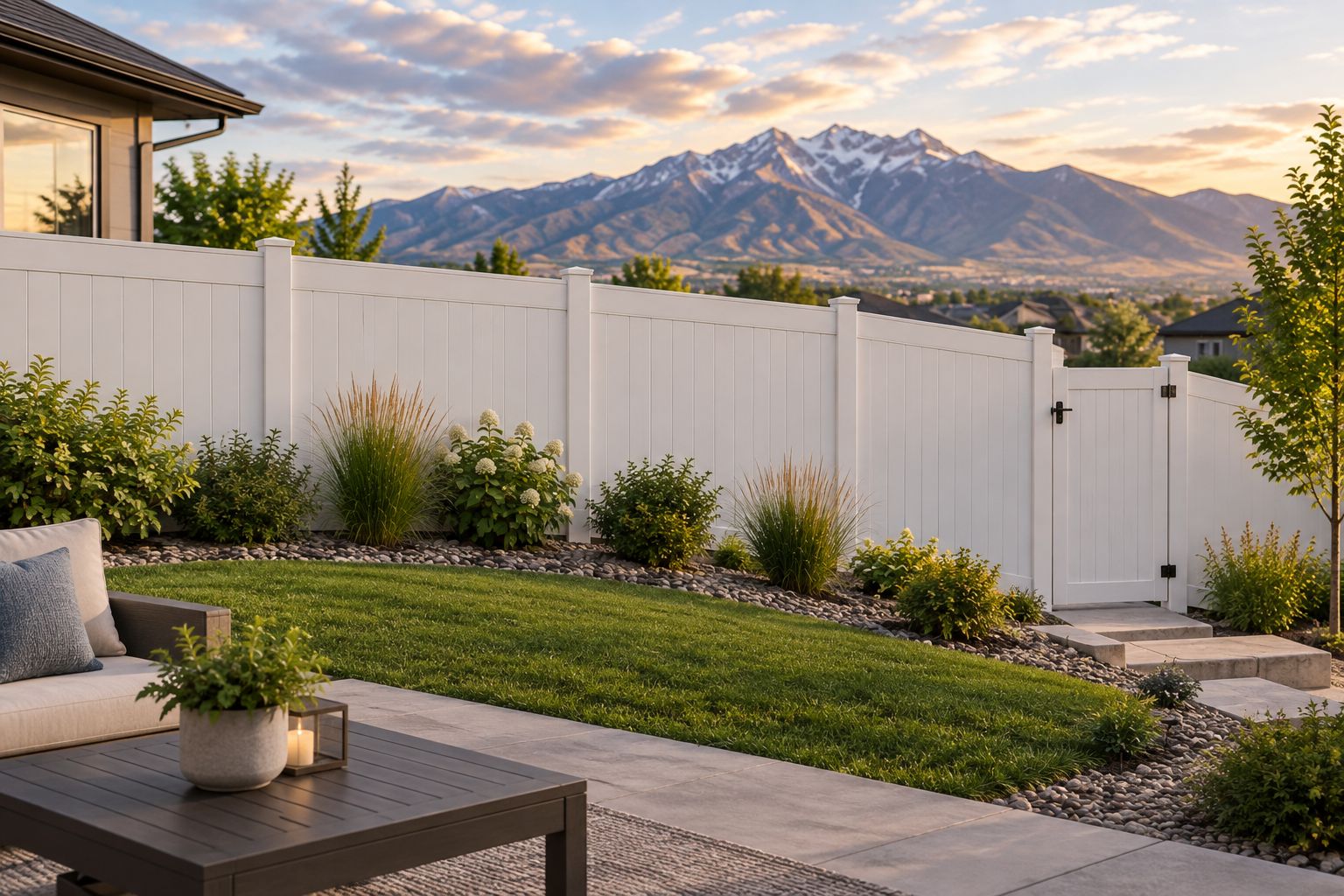
Vinyl is the clearest choice for a homeowner who wants a solid visual screen without a routine of painting or staining. Depending on the style, a vinyl fence can define a backyard, screen a patio or create a quieter-looking backdrop for landscaping. It still needs occasional cleaning and a look over for loose parts or damage.
Pay attention to where a panel meets a gate or a change in grade. A fence that screens the straight runs but leaves an awkward opening at the side of the house will not deliver the privacy you expected. Discuss the full layout, not just the panel style.
Vinyl pros:
- Solid styles provide privacy for yards and outdoor sitting areas.
- Routine painting and staining are not part of normal vinyl upkeep.
- Cleaning is usually a more relevant recurring task than refinishing.
Vinyl cons:
- A solid fence can block a view you wanted to keep.
- Damage to a panel or component still calls for repair.
- Dirt and marks remain visible until cleaned.
Best for: Homeowners who put backyard privacy ahead of an open sightline.
Verdict: Buy when a solid screen is the point of the fence. If your view matters more, choose an open design instead.
A solid privacy fence changes how an outdoor space feels. Before choosing a style, stand where you normally sit in the yard and check the sightlines from the street and adjacent properties.
2. Powder-coated aluminum: best for an open boundary
Powder-coated aluminum suits a homeowner who wants a defined edge without closing off a garden or view. Its open picket layout lets you see through the fence, and its finished surface does not call for routine painting in the way an unfinished surface might. Inspect the coating, connections and gate hardware as part of normal ownership.
The trade-off is straightforward: open sightlines also work in the other direction. Aluminum is a poor substitute for a solid privacy fence if screening neighbors or street activity is your main goal. Think through the spacing and gate layout when children or pets use the yard.
Powder-coated aluminum pros:
- Keeps views open while marking the boundary.
- Avoids the solid-wall appearance some homeowners dislike.
- Does not require a routine wood-staining schedule.
Powder-coated aluminum cons:
- Offers little visual privacy by itself.
- Damage to the finish or hardware needs attention.
- An open layout is not the right answer for every pet or privacy need.
Best for: Homeowners who value a visible boundary and an open view more than screening.
Verdict: Buy for an open perimeter. Skip it for privacy unless you have a separate screening plan.
3. Composite: best for a wood-like look
Composite is an option when you like the appearance of wood but do not want a traditional wood-staining routine. Its look and care requirements depend on the particular product and fence system, so compare the actual finish and instructions rather than treating every composite fence as interchangeable.
Ask how the chosen design handles corners, slopes, gates and individual repairs. Those details matter after installation, when access and appearance become day-to-day concerns. A sample can also help you judge whether the texture and color suit your house in outdoor light.
Composite pros:
- Offers a wood-like appearance without choosing a conventional wood finish routine.
- Solid designs can support a privacy-first layout.
- Gives appearance-focused homeowners another option beside vinyl.
Composite cons:
- Cleaning is still part of ownership.
- Care and repair methods vary by product.
- A wood-like surface will not be identical to natural wood.
Best for: Homeowners who want a wood-like look and will compare specific product-care requirements.
Verdict: Hold until you have reviewed the actual system’s care instructions and seen how its finish looks outdoors.
4. Galvanized chain link: best for a practical boundary
Galvanized chain link makes the boundary clear without turning it into a visual wall. It is useful when keeping the yard open to view matters more than creating a private outdoor room. Check the mesh, connections, posts and gates periodically; a fence that is simple to live with still needs attention when a part is loose or damaged.
Chain link does not become a privacy fence simply because screening can be added. If privacy is the primary goal, compare a purpose-built solid fence before planning additions to an open one. The same applies to curb appeal: decide whether a utilitarian look fits the part of the property where you will see it most.
Galvanized chain link pros:
- Establishes a clear boundary while preserving visibility.
- Does not need a routine wood-staining schedule.
- Makes it easy to see activity on the other side of the fence.
Galvanized chain link cons:
- Provides limited privacy on its own.
- Its appearance will not suit every front-facing or patio-adjacent space.
- Gates and connections still need inspection.
Best for: Homeowners whose main need is a visible, practical perimeter rather than screening.
Verdict: Buy for an open boundary. Skip it as your first choice when backyard privacy drives the project.
How this 2026 ranking works
This is a decision order, not a claim that one material suits every Utah property. Vinyl ranks first because a solid privacy fence answers a common homeowner need without routine painting or staining. Powder-coated aluminum follows for people who want the opposite visual effect: a clear boundary that leaves the view open.
Composite earns its place for a wood-like appearance, but you need to assess the specific system before calling it low maintenance for your yard. Galvanized chain link is a practical boundary choice; it ranks last here because privacy and curb appeal are central to this residential comparison. None of the materials removes the need to check posts, gates and damage.
For an Eagle Mountain, Mapleton, Saratoga Springs, Alpine or Lehi property, bring the same questions to a fence discussion: Where do you need screening? Which views should stay open? Who uses each gate? Where does the ground slope? Diamond Fence Utah can discuss residential installation in the Salt Lake Valley without forcing every yard into the same material choice.
Talk through your fence plans
Discuss privacy, layout and low-maintenance options for your property.
Which low-maintenance fence should you choose?
Choose vinyl if you want one default answer for a private residential yard in 2026. Its main advantage in this comparison is not that it needs no care; it is that a solid fence can give you privacy without putting routine painting or staining on your calendar. Confirm the gate plan and how the fence meets slopes before you commit.
Choose powder-coated aluminum if your view matters more than screening. Choose composite if a wood-like appearance is the priority and you have checked the exact product’s care needs. Choose galvanized chain link when a visible boundary is the job. If your yard needs both privacy and openness, identify which fence runs serve each purpose rather than expecting one style to do both equally well.
Diamond Fence Utah is best for Salt Lake Valley homeowners who want to discuss a low-maintenance fence as an installation project, not just choose a material from a list. Ask for a quote based on your layout and the options available for your property.
FAQ
What is the best low-maintenance fence material for a Utah backyard in 2026?
Vinyl is the best default for a Utah backyard when privacy is the priority. Solid styles screen the yard without routine painting or staining, although cleaning and inspections still matter.
Is vinyl or aluminum better for a low-maintenance fence?
Vinyl is better when you want a solid privacy screen; powder-coated aluminum is better when you want an open view. Both still need occasional cleaning and checks for damage or loose hardware.
Does a low-maintenance fence need any upkeep?
Yes. Inspect panels or mesh, posts, connections and gates, and clean surfaces when they become dirty. Low maintenance does not mean damage or gate problems can be ignored.
Is chain link a good privacy fence?
Galvanized chain link is an open boundary, not a privacy-first fence. If screening is your main goal, compare solid fence designs before choosing mesh and planning additions.
Is composite fencing the same as a wood fence?
No. Composite can provide a wood-like look, but its construction and care requirements depend on the specific product. Review the chosen system’s instructions before deciding whether it fits your upkeep goals.
What should I check before choosing a fence for pets or children?
Check the full layout, including gates, gaps and changes in ground level. Material alone does not tell you whether the finished boundary fits the way your household uses the yard.
Can Diamond Fence Utah help with a low-maintenance fence project?
Diamond Fence Utah is a residential and commercial fence contractor and installer in the Salt Lake Valley. Discuss your property, privacy goals and available installation options before choosing a material.
One last thing
In 2026, the easiest fence to maintain is not necessarily the material with the shortest care list. A gate that fits how you enter the yard and a layout that gives you privacy where you actually need it will do more for day-to-day satisfaction. Mark those spots before you request a quote from Diamond Fence Utah.