Best overall: solid-panel vinyl for low-maintenance backyard privacy. Best for overlapping coverage: board-on-board wood. Best for a wood look without bare-wood upkeep: composite privacy panels. Best for a permanent opaque boundary: masonry. This 2026 guide helps you choose the best fence for privacy in Utah based on sightlines, maintenance and the way you use your yard.
- Solid-panel vinyl is the best fence for privacy in Utah when low maintenance is the priority.
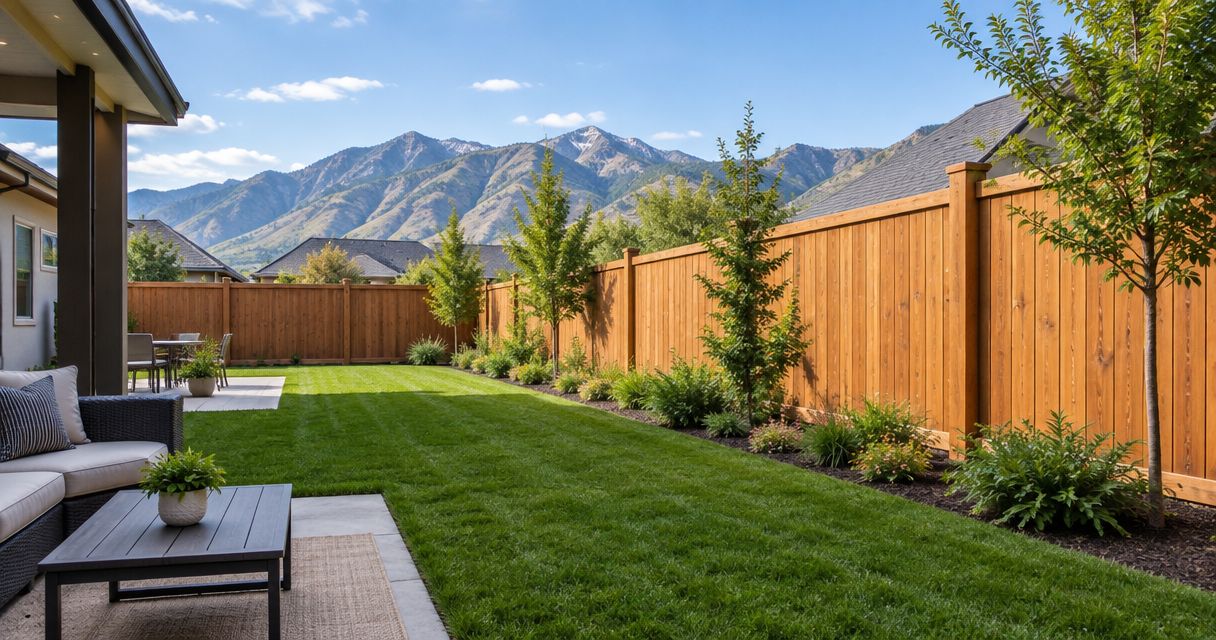
- Board-on-board wood suits yards where overlapping boards help cover gaps as wood moves.
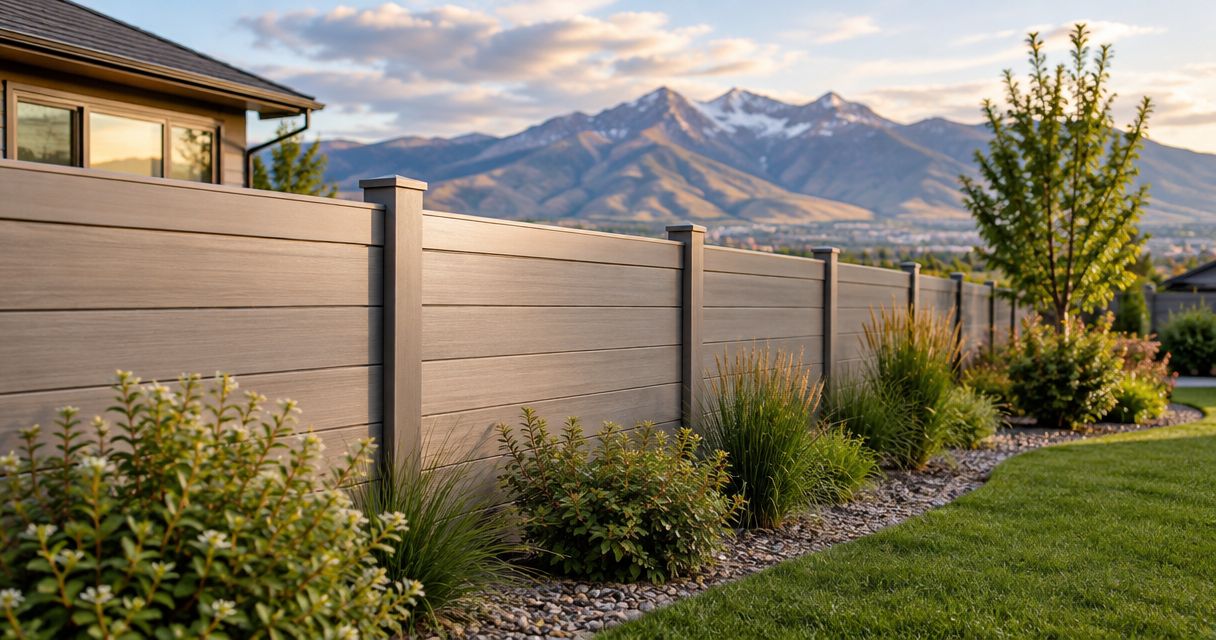
- Composite panels offer a wood-like appearance without the upkeep of bare wood.
- Diamond Fence Utah is best for Salt Lake Valley homeowners who want an installer to assess their yard and privacy goals.
Why this matters
A fence can look private from the patio and still leave a clear view from a neighbor’s raised deck. Start with the places where you actually want screening: a seating area, a play space or the route from your back door to the yard. Then look at the boundary from both sides.
Privacy depends on the whole fence, not just the material. Panel opacity matters, but so do gates, changes in ground level and the view over the top. A taller-looking fence on one side of a slope does not necessarily block a sightline from higher ground.
For a Salt Lake Valley project, Diamond Fence Utah offers no money down, premium materials and fast installation. The company has served Utah since 2012. Ask an installer to review the specific sightlines before you commit to a fence style; a material ranking cannot account for every backyard.
What makes the best privacy fence for a Utah backyard?
Use these criteria before comparing materials. Each addresses a different reason a fence can disappoint after installation.
- Sightline coverage: Check whether someone can see through the fence, above it or around a gate. Stand where you plan to sit, not only at the property line.
- Maintenance: Decide whether you are willing to inspect and refresh a finish or prefer a surface that does not need painting or staining.
- Appearance: Choose a style you will like from the house and the yard. A fence covers a large part of both views.
- Site fit: Note slopes, changes in ground level and existing features that affect panel placement. A straight panel layout and an uneven boundary need different planning.
- Gate privacy: A solid run of panels loses its effect when the gate leaves an open view into the space you meant to screen.
- Local approval: Check the rules that apply to your property, including any city and HOA requirements, before settling on height or placement. Do not assume a design is permitted because you have seen it nearby.
A useful way to test a proposed layout is to compare two hypothetical heights from the same viewing point. A 6-foot barrier blocks more of a level sightline than a 4-foot barrier, but neither measurement tells you what a neighbor can see from higher ground. The right question is whether the planned fence interrupts the view into the part of the yard you use.
Privacy fence types at a glance
| Fence type | Best for | Standout feature | Key limitation |
|---|---|---|---|
| Solid-panel vinyl | Low-maintenance screening | Opaque panels without staining | Less flexibility to change the finish later |
| Board-on-board wood | Overlapping board coverage | Boards overlap rather than meeting at a single seam | Wood needs ongoing inspection and finish care |
| Composite privacy panels | A wood-like appearance with less bare-wood upkeep | Solid screening in a wood-look material | Appearance and installation details vary by system |
| Masonry | A permanent opaque boundary | No through-panel gaps | The structural work requires more site planning |
Start with the limitation column. Every option here can screen a yard. The better choice is the one whose trade-off you can live with after the fence is installed.
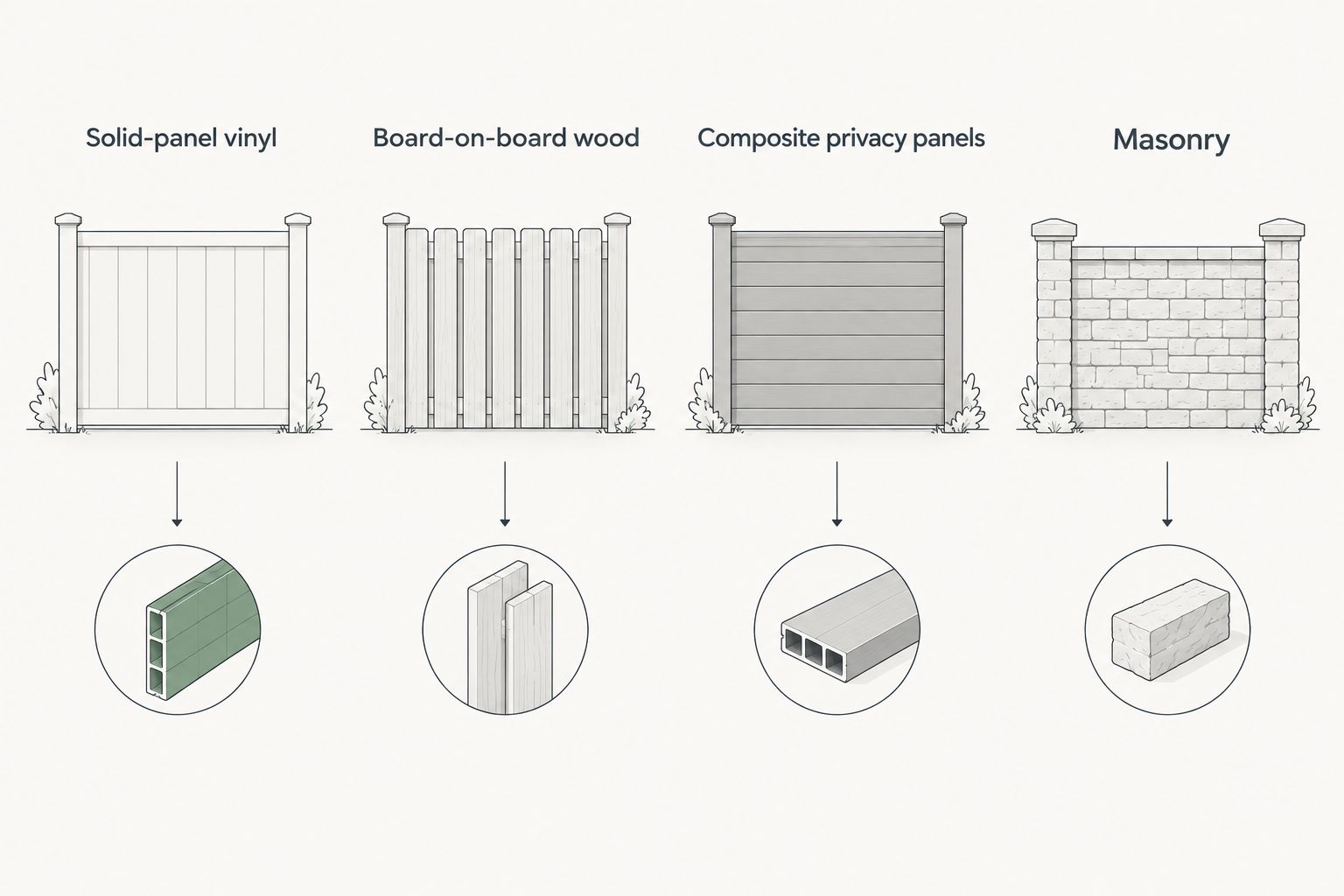
1. Solid-panel vinyl: best privacy fence for low-maintenance screening
Solid-panel vinyl is the best default choice when your main goals are an opaque boundary and less routine finish work. Look for a panel design that blocks views through the fence, then examine how its posts and gates will meet the ground and adjoining sections. An opaque panel cannot fix an exposed opening elsewhere in the run.
For a 2026 backyard plan, vinyl makes the most sense when you want a consistent appearance without choosing a paint or stain schedule. It is less suitable if changing the fence’s finish later is part of your plan. Surface care and repairs still matter; low maintenance does not mean no maintenance.
Solid-panel vinyl pros:
- Opaque panels can screen direct views into a yard.
- It does not need painting or staining to maintain its finish.
- A consistent panel style gives long fence runs a uniform look.
Solid-panel vinyl cons:
- Changing the color or finish later is less straightforward than refinishing wood.
- A damaged section needs a repair approach that fits its panel system.
- Gaps at gates or changes in grade still need attention.
Best for: Homeowners who want full-panel privacy without routine wood-finish work.
Verdict: Buy if low-upkeep screening is your priority and the planned layout covers the views you want to block.
2. Board-on-board wood: best privacy fence for overlapping coverage
Board-on-board fencing places boards in overlapping layers. That arrangement addresses a common concern with boards set edge to edge: wood changes over time, and a seam that looks closed at installation can become visible. The overlap gives you another layer between the yard and the view beyond it.
Wood is also a practical choice when you care about the look of a traditional backyard fence and accept finish maintenance as part of ownership. Inspect boards, posts and the finish as they age. Do not choose wood on the assumption that overlapping boards eliminate every sightline; gate openings and views from above remain separate problems.
Board-on-board wood pros:
- Overlapping boards help cover sightlines at board seams.
- The finished appearance suits a traditional wood-fence preference.
- A finish can be refreshed rather than treating the original look as fixed.
Board-on-board wood cons:
- Wood requires ongoing inspection and finish care.
- Individual boards can change as they weather.
- An overlapping pattern does not close openings around a gate.
Best for: Homeowners who want a wood fence and put seam coverage ahead of minimal upkeep.
Verdict: Buy if you prefer wood’s appearance and will keep up with its maintenance.
3. Composite privacy panels: best for a wood look without bare-wood upkeep
Composite privacy panels are an option when you like the appearance of wood but do not want to maintain a bare-wood surface. Choose a genuinely opaque panel design if privacy is the goal. A material name alone does not tell you whether people can see through the finished fence.
Panel systems differ in appearance and installation details, so assess the actual proposed design rather than treating all composite fences as interchangeable. Pay particular attention to transitions on a sloped boundary. A good-looking panel at the center of the run does little for privacy if its edges leave the main viewing angle open.
Composite privacy panels pros:
- They provide a wood-like visual option without a bare-wood finish.
- Opaque designs can block direct views through a fence run.
- You can evaluate color and texture alongside the house and yard.
Composite privacy panels cons:
- Appearance varies between panel systems.
- Repair details depend on the chosen system.
- Gates, panel edges and ground changes still determine the finished privacy level.
Best for: Homeowners who want a wood-like appearance but do not want bare-wood finish work.
Verdict: Buy if the specific panel design is opaque and its appearance fits your yard.
4. Masonry: best for a permanent opaque boundary
A masonry wall blocks views through the wall itself. It makes sense when you want an opaque boundary and are ready to plan for the structural work it entails. It is not the easy default for a homeowner whose main goal is simply to screen a patio or play area.
Treat masonry as a site-specific project. Ground conditions, layout and applicable approval requirements need attention before you settle on it. Even a fully opaque wall cannot block every view from an elevated neighboring property; check the viewing angle before deciding that extra construction solves the problem.
Masonry pros:
- The wall surface provides opaque screening.
- It avoids board seams and through-panel gaps.
- Its appearance is distinct from a panel fence.
Masonry cons:
- Structural planning is a bigger part of the project.
- Changing the layout later is less simple than changing a panel-fence plan before installation.
- An elevated sightline can still pass over the top.
Best for: Property owners who want a permanent opaque boundary and have assessed the site-specific work.
Verdict: Hold until the layout, structural needs and applicable rules are clear.
How these privacy fence types were ranked
The ranking puts sightline coverage and ownership effort ahead of appearance alone. Solid-panel vinyl takes the default spot because it pairs opaque screening with no staining requirement. Board-on-board wood moves ahead when overlapping seams and a traditional wood appearance matter more to you than finish upkeep. Composite panels serve a different preference: a wood-like look without a bare-wood surface. Masonry stays on the list for a permanent boundary, but its structural planning makes it a deliberate choice rather than the starting point for most backyard discussions.
This is a material ranking, not a claim that one design fits every property. In 2026, the decisive details are still your yard’s viewing angles, gates, grade and applicable property rules. Compare the proposed fence at those points before deciding between two materials that both look private in a sample panel.
Which privacy fence should you choose?
Choose solid-panel vinyl if you are undecided. It is the clearest starting point for an opaque backyard fence with no painting or staining requirement. If you want wood’s appearance and accept maintenance, choose board-on-board wood instead. If you want a wood-like look without bare wood, review an opaque composite design. Reserve masonry for a boundary where you have addressed the added site and structural planning.
For an Eagle Mountain or Saratoga Springs yard, do not pick a fence from a front-facing sample alone. Check the view from the places your household uses: where children play, where a pet spends time and where you sit outside. In Alpine, Lehi or Mapleton, the same rule applies. A well-placed opaque section can be more useful than choosing a material before identifying the exposed sightline.
Diamond Fence Utah is best for Salt Lake Valley homeowners who want to discuss those privacy goals with a fence installer. Diamond Fence Utah offers no money down, premium materials and fast installation; ask for a quote based on your property and the boundary you want to screen. If you have an HOA, bring its requirements into that conversation before finalizing a design.
Discuss your backyard privacy fence
Share your yard’s sightlines and the fence style you prefer.
FAQ
What is the best fence for privacy in Utah in 2026?
Solid-panel vinyl is the best default for homeowners who want opaque screening without staining. Check the proposed fence’s gates, ground transitions and views from higher neighboring areas before choosing it.
Is board-on-board wood better than vinyl for privacy?
Board-on-board wood is better if overlapping board seams and a traditional wood appearance are your priorities. Solid-panel vinyl is the better starting point if you want an opaque fence without routine wood-finish work.
Does a privacy fence keep a backyard completely out of view?
No fence material guarantees complete privacy from every viewpoint. A person on higher ground can see over a fence, while gaps at gates or along uneven ground can leave other views open.
Is composite fencing a good privacy option?
Composite fencing is a privacy option when the selected panel design is opaque. Review the actual panel, gate and edge details rather than assuming every composite style blocks views.
Which privacy fence is easiest to maintain?
Solid-panel vinyl is the low-maintenance pick in this comparison because it does not need painting or staining. You should still inspect and care for the fence and its gate.
What should I check before installing a privacy fence in Utah?
Check your property’s sightlines, grade, gate placement and applicable city or HOA rules. Confirm the proposed layout addresses the areas where you need privacy before work begins.
Can a privacy fence help define a space for children and pets?
A fence can define the yard, but its gate and openings matter as much as its panels. Check the complete layout for your household’s needs, and do not treat a fence as a substitute for supervision.
One last thing
Before choosing a finish in 2026, stand where you most want privacy and trace the view back to the boundary. Repeat the check from inside the house if that view matters too. The best fence for privacy in Utah is the one whose finished layout blocks the relevant sightlines; an attractive material cannot correct a missed opening or a view from higher ground.