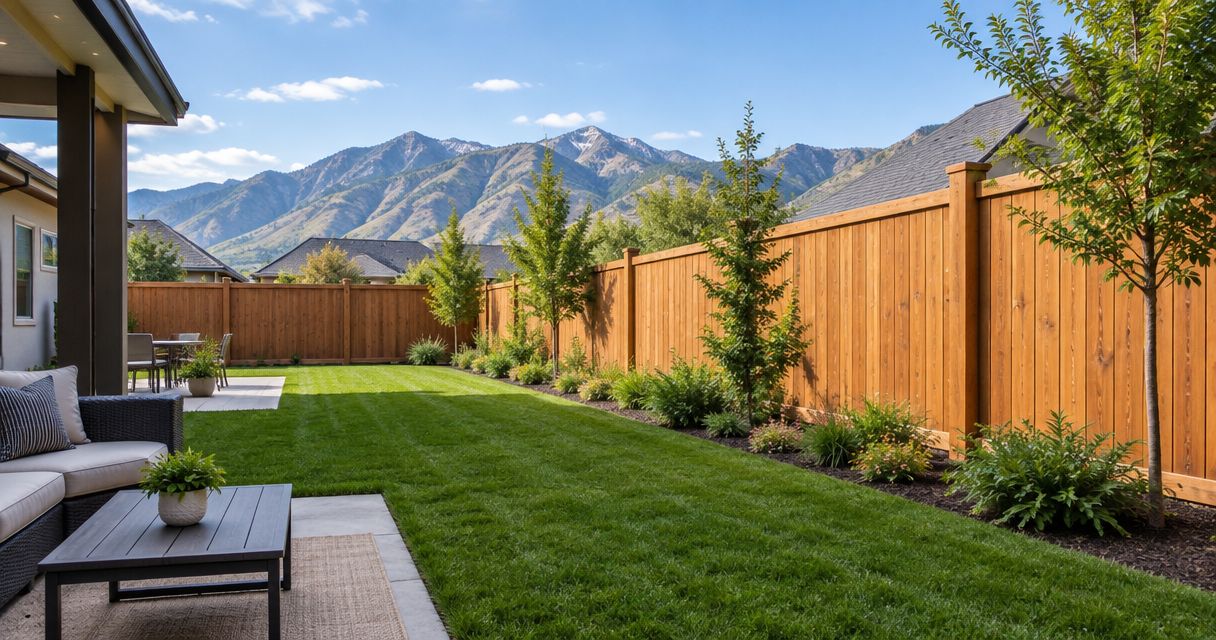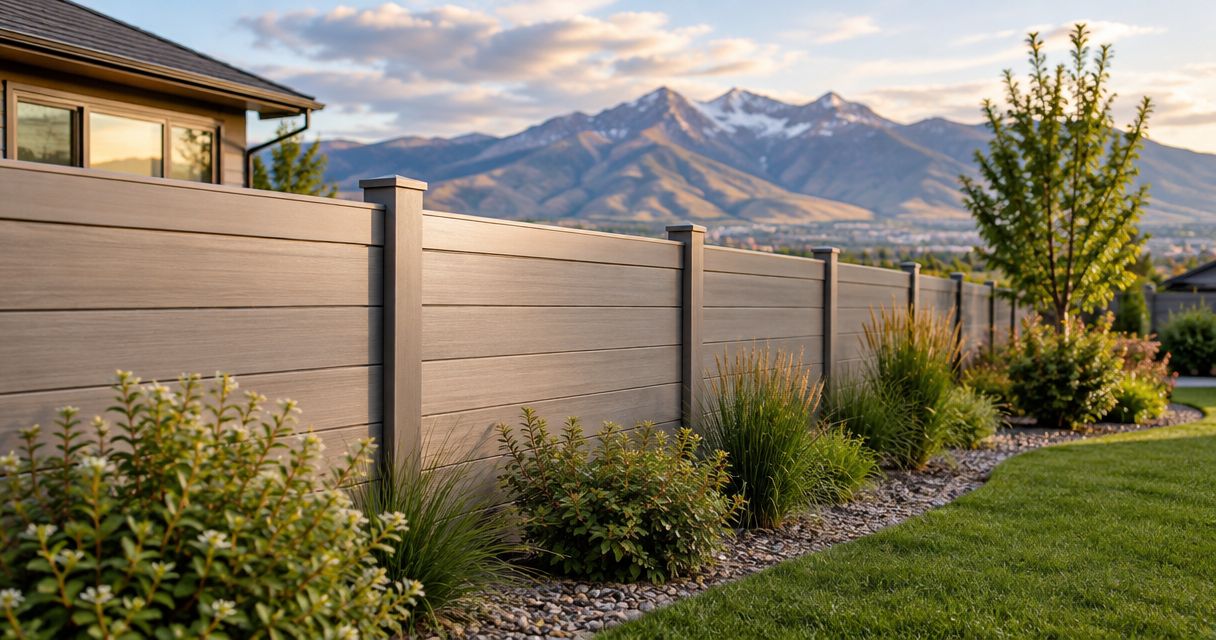
Best overall: solid wood privacy fencing for a backyard where your dog needs a visual barrier. Best for low-maintenance privacy: vinyl privacy fencing. Best for keeping a view: aluminum fencing. The best fence for pet friendly backyards in 2026 is the one that keeps your pet contained at the gates and ground line, not just along the straight runs.
- Solid wood privacy fencing is the best fence for pet friendly backyards when a visual barrier matters.
- Vinyl privacy fencing suits homeowners who want privacy with less routine upkeep; aluminum fencing keeps the yard visible.
- Check gates, ground gaps and your pet’s climbing or digging habits before choosing a fence style.
- Diamond Fence Utah is best for Salt Lake Valley homeowners who want a local installer to plan around their yard.
Why this matters
A fence can look secure from the patio while leaving an escape route beneath a gate or beside a post. Dogs also respond differently to what they see beyond the yard: a solid barrier blocks that view, while an open fence lets them watch the sidewalk. Your choice has to fit the pet you have, the privacy you want and the upkeep you will actually do.
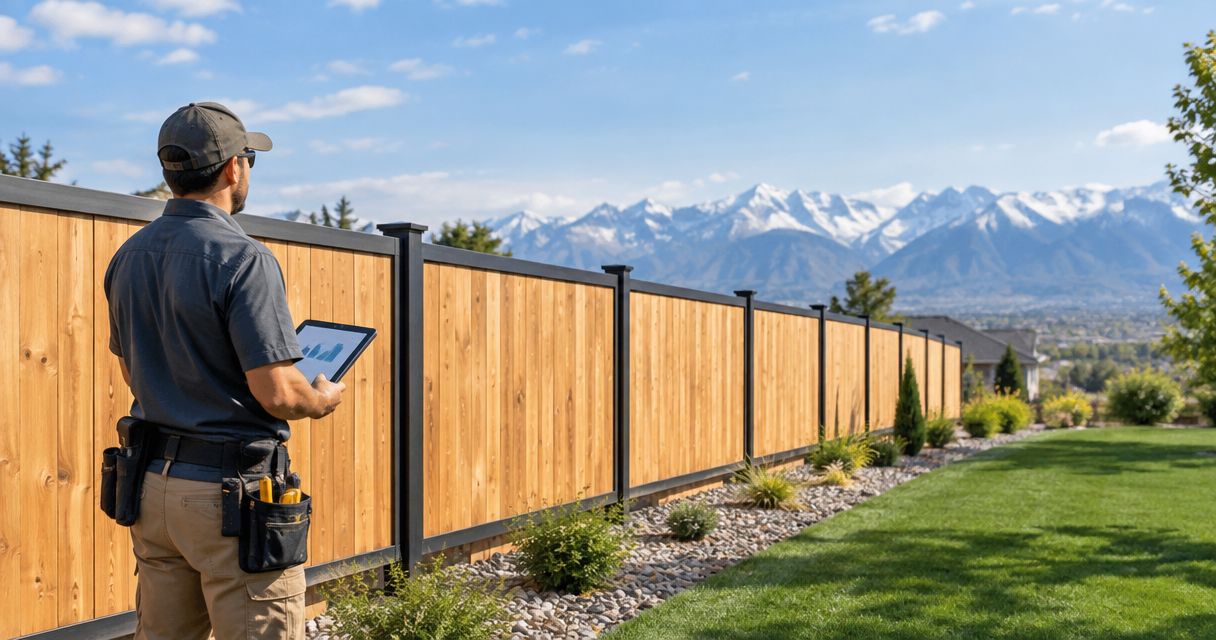
In 2026, start with your pet’s behavior rather than a material sample. Does your dog dig at the boundary, squeeze through openings, climb, or rush a gate when it opens? Those questions give Diamond Fence Utah a more useful starting point for a Salt Lake Valley fence discussion than a picture of a finished yard alone. Diamond Fence Utah has served Utah since 2012; its stated advantages include no money down, premium materials and fast installation.
What makes the best fence for pet-friendly backyards?
- Containment at the ground line: Look for places your pet can dig beneath or squeeze through, especially where the yard changes grade.
- Appropriate openings: Match the spacing between pickets, rails or mesh to your pet’s size. An opening that contains one dog will not necessarily contain another.
- A gate that closes securely: A well-built fence still fails if a gate swings open, drags or leaves a gap underneath.
- The right visibility: A solid fence reduces views of passersby. An open fence preserves sightlines but can leave a reactive dog watching every movement.
- Maintenance you can keep up with: Wood, vinyl, metal and mesh need different kinds of attention. Pick a style whose repairs you will notice and address.
- Fit for your property: Walk the boundary and check grade changes, existing landscaping and access points before settling on a design.
Use these criteria as a checklist, not a scorecard. If your dog can escape beneath a gate, a material’s appearance will not solve the problem. If privacy is the main reason you are fencing, an open design will not meet that need even when it contains the dog.
Pet-friendly fence styles at a glance
| Style | Best for | Standout feature | Key limitation |
|---|---|---|---|
| Solid wood privacy | Visual screening | Blocks views through the fence | Needs ongoing attention to boards and finish |
| Vinyl privacy | Lower-maintenance screening | Solid barrier with routine cleaning | Damage to a panel still needs repair |
| Aluminum panel | Keeping an open view | Defined boundary without a solid wall | Opening size matters for smaller pets |
| Chain link | Visibility across the yard | Mesh boundary with open sightlines | Offers little privacy |
| Wood-and-wire | A tailored opening pattern | Frame and mesh can suit a specific layout | Mesh attachment and ground gaps need close review |
The table identifies the main trade-off; it cannot tell you whether a particular layout contains your pet. In 2026, check the proposed gate and ground-line details before choosing from a material sample.
1. Solid wood privacy: best fence for a visual barrier
Solid wood privacy fencing is the default pick when you want to screen the backyard as well as contain a pet. Closely placed boards interrupt the view through the fence, which also gives children and adults more privacy outdoors. The gate and the space beneath the fence still need their own plan; solid boards do not close a ground gap.
Solid wood privacy pros:
- Blocks most direct views through the fence when built as a solid design.
- Gives the backyard a defined, private edge.
- Individual boards can be inspected for damage.
Solid wood privacy cons:
- Boards and finish need ongoing attention outdoors.
- A dog that digs can still get beneath the fence.
- A solid fence can feel too enclosed if you want to see beyond the yard.
Best for: Homeowners whose pets react to activity outside the yard and who also want privacy.
Verdict: Buy if a visual barrier is your leading requirement and you will maintain the wood. Do not treat the solid surface as a substitute for checking the gate, posts and ground line.
2. Vinyl privacy: best fence for lower-maintenance privacy
Vinyl privacy fencing gives you a solid visual barrier without the wood-finishing routine. It is a practical choice when privacy matters but regular staining or painting does not appeal to you. You still need to inspect panels and gates for damage and make sure the design meets the ground closely enough for your pet.
Vinyl privacy pros:
- Screens views into and out of the backyard.
- Does not require wood staining or painting.
- Can be cleaned as part of routine yard upkeep.
Vinyl privacy cons:
- A damaged panel still needs attention; lower maintenance does not mean no maintenance.
- The solid surface removes the open view some homeowners prefer.
- Ground gaps and gate openings remain potential escape points.
Best for: Homeowners who want a private backyard without a wood-finishing routine.
Verdict: Buy if privacy and simpler upkeep are your priorities. Compare the actual gate and panel layout, not just the material, before committing.
3. Aluminum panel: best fence for an open view
Aluminum panel fencing marks the yard boundary while keeping sightlines open. That makes it useful when you want to see the landscape beyond the fence rather than screen it off. The space between pickets and beneath the panels is the deciding detail for a smaller pet.
Aluminum panel pros:
- Preserves an open view from the yard.
- Does not require a wood-finishing routine.
- Makes activity outside the fence easy to see.
Aluminum panel cons:
- Does not provide the privacy of a solid fence.
- A pet can see people or animals passing outside.
- Picket spacing and ground clearance must suit your pet.
Best for: Homeowners who value sightlines and have a pet that can be contained by the chosen panel layout.
Verdict: Hold until you have checked the exact openings against your pet’s size and behavior. An attractive open panel is not a good pet fence if your dog can pass through or under it.
4. Chain link: best fence for a visible boundary
Chain link creates a mesh boundary while leaving the yard open to view. It is useful when containment matters more than screening and you want to see through the fence from either side. Pay close attention to how the mesh meets posts, gates and the ground; those junctions matter as much as the mesh itself.
Chain link pros:
- Keeps sightlines across the boundary.
- Makes the condition of the fence easy to inspect visually.
- Defines the yard without creating a solid wall.
Chain link cons:
- Provides little visual privacy.
- A dog can still watch activity beyond the fence.
- Loose or lifted mesh at the bottom needs repair.
Best for: Homeowners who want a visible boundary and do not need a privacy screen.
Verdict: Buy if an open view is a benefit in your yard. Skip it if your main goal is to block the view that sets your dog barking.
5. Wood-and-wire: best fence for a tailored layout
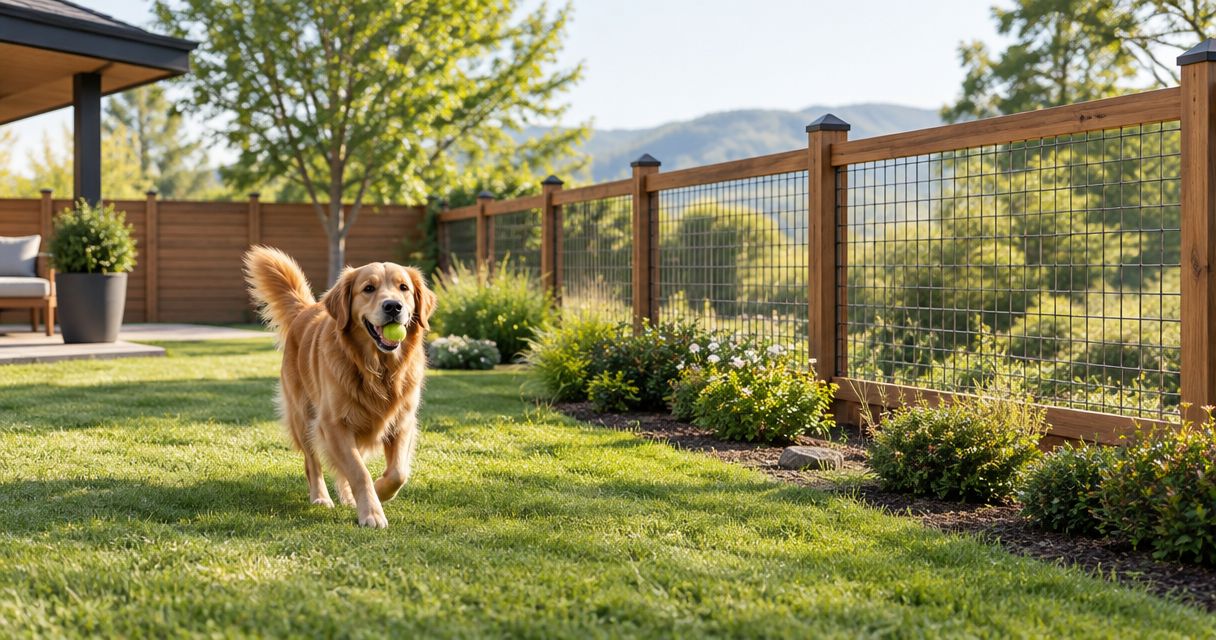
A wood frame with wire infill offers another way to define a yard without a solid privacy wall. The frame sets the shape of the fence, while the chosen mesh determines how open it feels and whether a pet can pass through. Because those details vary by design, review the proposed openings and attachment points rather than assuming every wood-and-wire fence works the same way.
Wood-and-wire pros:
- Keeps some visibility through the fence.
- Gives you a design choice when neither a solid wall nor standard panels suit the yard.
- Allows the opening pattern to be considered alongside your pet’s size.
Wood-and-wire cons:
- Provides less privacy than solid wood or vinyl.
- Mesh attachments and wood members both need inspection.
- Poorly planned ground clearance leaves an escape route.
Best for: Homeowners who want a partly open fence and are willing to review the mesh, frame and gate details together.
Verdict: Hold until the proposed design shows how it contains your pet at every opening. The words wood-and-wire describe a construction approach, not a single pet-safe specification.
Check the layout before choosing the material
Walk the intended fence line as if you were looking for a way out. Look beneath existing gates, along changes in grade and beside anything a pet uses to reach the boundary. Then watch how your pet behaves when someone passes the yard. That short inspection tells you whether privacy, opening size or the ground line deserves your attention first.
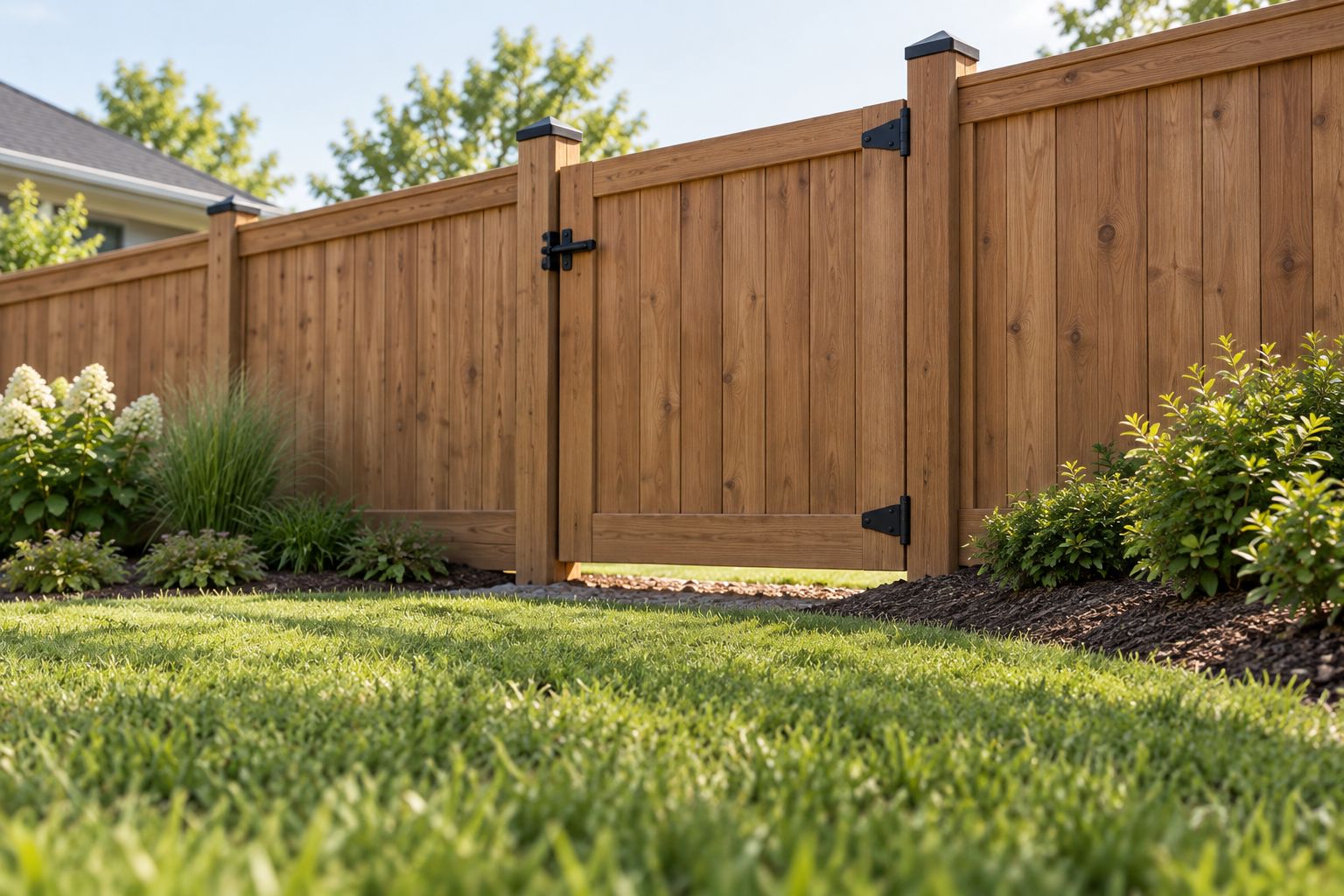
For a dog that digs, discuss the bottom edge rather than relying on a taller fence alone. For a dog that watches passing activity, compare a solid design with an open one from your pet’s usual spot in the yard. For a small pet, inspect every opening in the proposed gate and fence. These checks apply whether you live in Eagle Mountain, Mapleton, Saratoga Springs, Alpine, Lehi or elsewhere along the Wasatch Front.
Check applicable local requirements and any property rules before installation. Those requirements are separate from pet containment: a permitted fence style can still be a poor fit for a dog that squeezes through its openings. Bring both sets of questions to the fence discussion so the design addresses the yard you actually have.
How these fence styles were ranked
The ranking puts the strongest combination of pet containment and homeowner privacy first, then separates the alternatives by their distinct use cases. Solid wood leads because it provides a visual barrier; vinyl follows for homeowners who want that barrier with a different upkeep routine. Aluminum, chain link and wood-and-wire serve readers who prefer an open view, but each demands close attention to openings.
This is a style ranking, not a claim that one material fits every dog. Diamond Fence Utah is best for Salt Lake Valley homeowners who want a local installer to plan a pet-friendly fence around their yard. In 2026, the decisive question for any installer is how the proposed fence addresses your pet’s behavior at the gate, along the bottom edge and across changes in grade.
Which pet-friendly fence should you choose?
Choose solid wood privacy fencing by default if you want both containment and a backyard that feels private. Choose vinyl privacy when you want a similar visual barrier without wood finishing. If seeing beyond the yard matters more, compare aluminum, chain link and wood-and-wire by the actual size of their openings and how the bottom edge will meet your property.
Do not make the final choice from a photograph. Stand where your pet stands, look toward the street or neighboring activity, and trace the entire proposed boundary. A fence only works as a pet enclosure when its gate, corners and ground line work with its panels.
Plan your pet-friendly fence
Discuss your yard, privacy goals and pet’s escape habits with Diamond Fence Utah.
FAQ
What is the best fence for pet friendly backyards in 2026?
Solid wood privacy fencing is the best default when you want pet containment and a visual barrier. Check the gate, ground line and your pet’s digging or climbing habits before choosing a design.
Is vinyl or wood better for a backyard with dogs?
Choose vinyl privacy for a solid barrier without wood finishing; choose solid wood when that look and its maintenance suit your yard. Neither material fixes a gap beneath a gate.
Is chain link a good fence for dogs?
Chain link is a good fit when you want a visible boundary rather than privacy. Inspect the mesh where it meets the ground, posts and gate, and consider whether outside activity distracts your dog.
Can a small dog get through an aluminum fence?
A small dog can get through an aluminum fence if the chosen picket spacing or ground clearance leaves an opening it can use. Check the actual panel and gate layout against your pet before installation.
What should I ask a fence installer about my dog?
Ask how the design addresses digging, climbing, gate security and changes in ground level. Tell the installer where your pet already tests the boundary so those spots receive attention.
How do I choose a pet fence if I also want privacy?
Start with solid wood or vinyl privacy fencing, then compare the upkeep each requires. Review the gate and bottom edge separately because privacy panels alone do not contain a pet.
Does Diamond Fence Utah install residential fences in the Salt Lake Valley?
Yes. Diamond Fence Utah is a residential and commercial fence contractor and installer in Utah’s Salt Lake Valley; discuss your yard and pet’s behavior when asking about a fence plan.
One last thing
The least noticeable part of your fence can be the most important to your pet: the space beneath a closed gate. In 2026, make that spot part of the design conversation before you settle on a material. Diamond Fence Utah’s no-money-down approach gives you a clear reason to ask about the proposed layout, not just the finished appearance.